Monday, October 18, 2010

Launch of JobFit in Waterford

This week I attended the launch of JobFit in Waterford. JobFit is a new programme funded by the Labour Market Activation Fund of the Department of Education and Skills which provides free support, employability training and recognised qualifications to help unemployed people find a job. JobFit will be delivered by TBG Learning, part of the Rehab Group. The programme provides soft-skills training, work placements, and support into and during the early stages.

The launch was very professional and I was pleased to attend. I spoke to many course participants and they all spoke glowingly of the training provided and of how it lifted their confidence. One of the participants addressed the gathering and spoke about his positive experience and his success in getting a job. It was very satisfying to hear him proudly tell his story.

JobFit is available to people who have been receiving benefits for a minimum of three months who are qualified to Junior Certificate level or below. It may in the future be extended to leaving certificate level. The programme currently operates out of Wallace House in Maritana Gate. I would encourage people who satisfy the qualifying criteria and are interested in improving their job seeking skills to drop in and sign up.

Thursday, October 7, 2010

Should we burn the bondholders?

The Government mantra ever since the banking crisis began was that the debt obligations of all banks would be paid for in full. The extended Government bank guarantee included bondholders and subordinated debt. Minister for Finance Brian Lenihan has always insisted that Anglo Irish Bank’s senior bondholders – those with the lowest ranking debt in the bank – will suffer no losses.

In recent times the language has changed. He seems to be opening the door to cutting a deal with the bank’s creditors, particularly with subordinated bondholders. These are investors at the back of the queue whose debt is paid only after senior bondholders have been paid – who may be expected to share in the “burden” of bailing out the bank. The total state investment in Anglo will reach at least €34 billion and may increase further.

I do not intend to deal with the outrageous nature of this bailout and state ‘investment’ in Anglo. I have done that in other posts. I am however posing questions about the nature of the bank guarantee and in particular the protecting of bondholders. We are constantly told by Government that senior debt obligations rank equally with deposits and other creditors under Irish law. So what – laws can be changed. The total amount owed to bondholders is about €4 billion. Subordinated debt amounts to about €2.4 billion.

I pose this question – would the sky fall in if we burned the bondholders? The Armageddon scenario painted by the Government that it would undermine the entire banking system is without foundation and completely without credibility. The banking system has been undermined anyway despite state guarantees and a recapitalizing of the banks.

I would like to see Anglo wound up as quickly as possible. The terms of the state guarantee should be revisited with the protection of all bondholders removed. This would allow the Government to negotiate with the bondholders on their terms and in the interests of the Irish people. We must remember that Anglo Irish Bondholders invested in a bank that was behaving in a reckless and greedy fashion. Their money was being lent to people to speculate recklessly. The speculators gambled, the bank gambled and in a way so did the bondholders. So why should they be protected from any pain?

Tuesday, October 5, 2010

Renewing faith in politics

I have been canvassing for the last eight months and I have spoken to thousands of people across Waterford City and County. Feelings and emotions are mixed. Some people are angry. Some are scared. Few are optimistic. Most are apathetic. A huge segment of the population has lost faith in politics. And who would blame them. They elected a Government in 2007 that has dumped 300,000 people on the dole, collapsed the economy, made a mess of our public finances and allowed the banks to act recklessly and then bailed them out to the tune of billions.

New Economy:

We need a change. We need a new economy. We need fresh thinking and a fresh approach. We need to have a real national conversation about what went wrong and why. We need to discuss what kind of economy we want and the values which underpin it. I believe in building a strong economy that serves the people and all the people. Not one which protects and represents special interests. Not one which sees greedy bankers and speculators rewarded when they make massive profits by not being asked to give anything back and rewarded again if they mess things up by being bailed out. We also need an economy built on solid foundations. This means going back to our roots, using our natural resources to best effect, tapping into the skills of our people and recognising the critical importance of indigenous industry and sustainable enterprise development.

New Society:

The core values which underpin our economy must also underpin society such as decency, honesty, integrity and a sense of fair play.Sadly these are values which some lost sight of during the Celtic tiger years and were absent in many corporate, banking and political board rooms. A lack of values at the top has a trickle effect and seeps into other sectors of society. One of the big lessons of the last ten years is that we all have a responsibility to each other. That goes for politicians, bankers, developers and speculators as it does for the rest of us. Corporate piracy, greed and irresponsibility are deeply anti-social and scar communities.

Just look at what happened with the banks – greed and reckless lending and speculating is being paid for by ordinary working people and those unemployed. Wages are cuts, jobs are lost, taxes for working people increased and benefits cut. Prescription charges for those with a medical card, cuts to child benefit, water charges, property taxes and social welfare cuts have either arrived or are on the way. Where are the cuts for those at the top? Where is the targeting of wealth? Where is the decency, integrity or a sense of fair play?

New Politics

So it is easy to see why people are apathetic and fed up to the back teeth with politics. They are getting shafted and feel helpless. They know the main opposition parties are not going to be much better. They have no faith in Fine Gael and Enda Kenny to turn things around. They know if anything they will cut deeper and worsen the recession.

We need a new kind of politics. We need to convince people that there is an alternative. What happened in the Irish economy was not as a result of politicians in power making a few mistakes. It was because of deliberate, calculated and thought out policies which delivered for an elite and vested interests. Light touch regulation was no accident. Tax breaks and shelters for the super rich did not emerge by accident. The creating of a property bubble, the driving up of the price of land and political corruption all went hand in hand.

The task of convincing people of the need for a real alternative is not going to be easy. Renewing a faith in politics is going to be a big challenge. In the time ahead the national media will focus on the main political parties and opinion polls. They will attempt to turn the next General Election into a popularity contest based on personalities. The people must not accept this and demand a real debate. Apathy must turn into action. The next election must be about what kind of country we want to build – it has to be about a new economy, a new society and a new kind of politics. It must also be about a new Government but not more of the same. And that is up to the people. As for this Government - their represenatives should read the 1916 proclamation and what it promised and examine what they delivered. I am sure it will be red faces all round..

Sunday, September 26, 2010

To privatise or not to privatise?

Waterford City Council management are currently looking at all options in relation to its waste collection service including privatisation. While no decision has been made it is clear that privatisation is a real option. The council management are tendering for professional legal and financial services so as to advise on the full implications of ceasing waste collection services. A full asset valuation is being sought so as to value the council’s current customer base.

Ever since waste charges were introduced privatisation was on the cards. Charges led to a private collector entering the market competing with the city council. In 2007 the city council had 16,635 customers while today it has 11,300. The cost of disposing of waste has increased dramatically with the current landfill levy standing at €50 per tonne up from €15 a Tonne in 2008. It is expected to climb as high as €75 a tonne by 2012. A new national waste policy, the introduction of VAT at 13.5% and the prospect of a second private operator entering the market makes it more costly to continue to provide the service.

I have already put my cards on the table. I have told the City Manager I will not support the council privatising the service. Despite leaking householders to a private operator we still have a very loyal customer base. Waterford City Council has provided a high quality service for decades providing good and sustainable employment. We also have 4,400 people in the city who avail of the waiver and these people need to be protected. The best way to do this is for the council to maintain the service.

The council staying in the game will not be easy. Tough decisions will have to be made. Sitting on the sidelines and blaming others will not save the service. I will do my utmost to protect the council service. I would appeal to those who avail of the councils service to make their voices heard. If you want the service to continue – contact your local public representative and contact the city council directly. The council management must exhaust all options before going for the nuclear option. This must involve consulting and engaging with its customers. Privatising the service is not inevitable and must not be seen as such by the city council management.

Thursday, September 23, 2010

Regeneration – opportunities for growth

Today I attended a Waterford conference titled Regeneration – opportunities for growth. The conference discussed a diverse range of topics such as the power of collaboration, revitalising the city and looking at opportunities for growth with a clear focus on regeneration. We heard from speakers from Norwich in the UK and Derry City in the North.

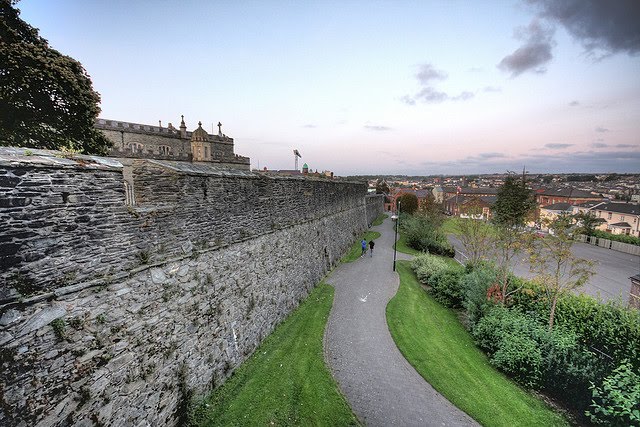
  The synergies between Norwich, Derry and Waterford are interesting. They are all medieval walled cities with a strong heritage. The similarities between Derry and Waterford are striking. There is a real case to be made for Waterford to twin with Derry. The speaker from Derry was Dr. Aideen McGinley who has been hugely instrumental in the rejuvenation of Derry. She was part of a team who devised a comprehensive development plan for Derry titled One City – One Plan – One voice.

Waterford City is undergoing significant regeneration. The development of the Viking Triangle, the prominence of the House of Waterford Crystal and the rejuvenation of our quays are all wonderful propositions. The city has upped its game on festivals and as the recent harvest festival showed this is already paying dividends. The tourism product is being developed further and this will yield significant benefits to the city.

We now need to look at other key opportunities for growth. We still have over 14,500 people in Waterford out of work. We need to play to our strengths and plan for the jobs of tomorrow. If we fail to plan we will fail to deliver. Waterford has obvious strengths in the tourism, pharmaceutical, science and I.T. sectors. We need to develop these further. I also believe there are opportunities in eco-innovation, the Green economy, eco-tourism and the digital media sector. Interestingly these are sectors Derry has also earmarked as potential growth areas.

We need to ask ourselves – are we getting enough in these key areas? Is there potential for growth? Are we getting the desired outcomes from the significant investment made in research and development at Waterford Institute of Technology? Are we creating the enterprise opportunities our social, educational and physical infrastructure merit? These are important questions that we need to address.

We must also avoid putting all our eggs in one basket. The continued attraction of foreign direct investment is important but realistically growth will emerge in indigenous micro enterprises. The green economy and digital media sectors provide realistic opportunities here as does tourism (including eco-tourism) and food and crafts. Waterford has a lot to offer and a lot is happening. However we need to do more as we still have far too many people out of work.

Wednesday, September 22, 2010

Heroin - a deadly and destructive drug

Tonight I attended a meeting organised by a community based drug initiative in the city about the challenges of heroin use. The meeting was primarily about raising awareness and the auditorium at Waterford Institute of Technology was packed to the rafters.

The main speaker was Rachael Keogh. Rachael’s story made national news when in 2006 she escaped Garda custody after being arrested in connection with shoplifting and in a desperate plea for help allowed horrific photos of her arms to be published. This was the start of a remarkable journey and her story is one of bravery, courage and inspiration.

We watched a TV documentary of her long road to recovery. As she spoke elegantly and honestly about her own personal battle, what struck me most was her change in language as she shifted from one stage of her recovery to another. As she desperately posed for photographers and faced amputation of both arms she spoke of her fears, of not wanting to do drugs, of her morals going out the window and of being better off dead. She had reached rock bottom.

When she started on her road to recovery her language became more positive. She talked about taking one day at a time, of needing to keep herself safe, of choosing life or death and of not being able to do it on her own. Her first step was to be weaned off heroin through methadone. She received on-going treatment and counselling services. At the end she spoke about how looking back at the past was like looking at a different person. She now believes she can do anything she puts her mind to. And I have no doubt that she can.

The other interesting aspect of her story was how it all started. She began by smoking hash. At the start she saw it as a laugh and some harmless fun. She enjoyed it and she felt great. She progressed from hash, to acid to E’s to cocaine and eventually heroin. It is then she became secretive and began to beg, borrow and steal to fund her habit. Her friends told her she would end up a wasted junkie but she ignored their concerns. She felt in control but also driven by the drug. In the end she was crippled with anger and hated everyone. She was trapped and firmly in the grip of a deadly and destructive drug.

Her story is an inspiration. It is harrowing, emotive, challenging but at all times honest and truthful. It is also a wake up call. We need to learn from the experience of people like Rachael. The heroin battle is a complex one that requires multiples responses. It presents a whole new set of challenges to the user, their families and agencies. It also presents challenges to communities. One of the lessons we need to learn from Rachael’s experience is that the community also have a role to play. Communities need to be positive, constructive and open to ensuring services are available and accessible to users and that we are there to help. Rachael is a living example of this

Sunday, September 19, 2010

The show must go on...

I attended a regional conference organised by the Enterprise Boards in the South East today for women in Business. Some would say I was going into the lions den. I found it to be an enthralling conference full of enthusiasm and optimism. The panel of speakers included women who are proven entrepreneurs and the best at what they do. The contributions were of the highest quality with an excellent opening address by the Mayor of Waterford Cllr Mary Roche.

What was most impressive was the positive nature of the gathering and the energy and enthusiasm of the delegates. One of the main speakers was Sean Gallagher of Dragons Den fame. He gave a powerful speech about the future of the Irish economy and the opportunities open to us. He spoke about the need for positivity, confidence and leadership in business, communities and politics. He said now is the time for people to lead from the front. I agree with this sentiment wholeheartedly. Now more than ever we need civic leaders stepping up to the plate, be they entrepreneurs, employee representatives or community leaders.

His speech got me thinking. We have a dearth of leadership at national level from our Government. They are hanging on to power by their fingertips, doing more damage to themselves and the country as they do. I think one of the biggest failures of this Government is their distance from where ordinary people are at. They have lost touch with reality and seem to live in a bubble. They see people as being there to serve them instead of them serving the people. They have forgotten what politics is really about – public service.

Most of the conference speakers spoke about the need to have a plan and a strategy. To succeed in business you have to have a plan and a strategy on how to get there. Hope is no substitute for a strategy. The same goes for running the country. Hoping the problems will go away is not good enough. We need a strategy out of recession and into recovery. We need real leadership.

On a visit to Waterford last week Martin McGuinness spoke about his optimism about the future and the ability of the people of this country. We are in the midst of a bad recession but as the Mayor of Waterford reminded us – there is no recession of the mind. If you could bottle the enthusiasm, energy and confidence of the women at today’s event and bring it into every boardroom and our national cabinet Ireland would no longer be in recession. As the theme of the conference proclaimed, despite our problems – the show must go on.